Drywall Debris Removal in Parrish, FL
Drywall scraps are bulky, brittle, and dusty when repeatedly handled. Keeping pieces contained and dry gives the crew a clearer view of the load and helps protect floors and walkways during removal.
03Drywall Debris Removal load plan
Prepare an estimate request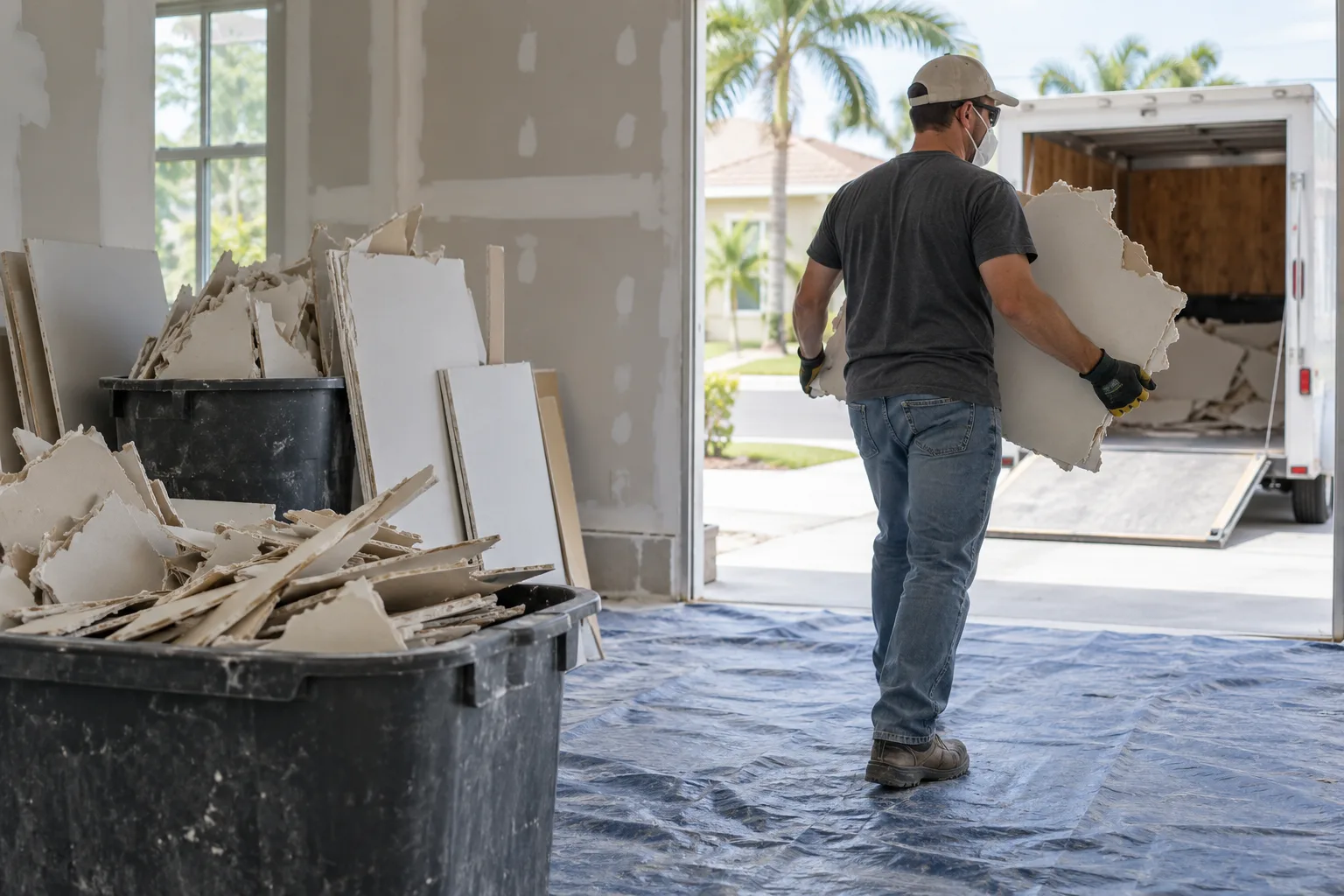
What this service can cover
- Clean installation offcuts
- Broken gypsum wallboard
- Removed wall and ceiling board
- Small amounts of compatible metal track
- Bagged light sweepings where accepted
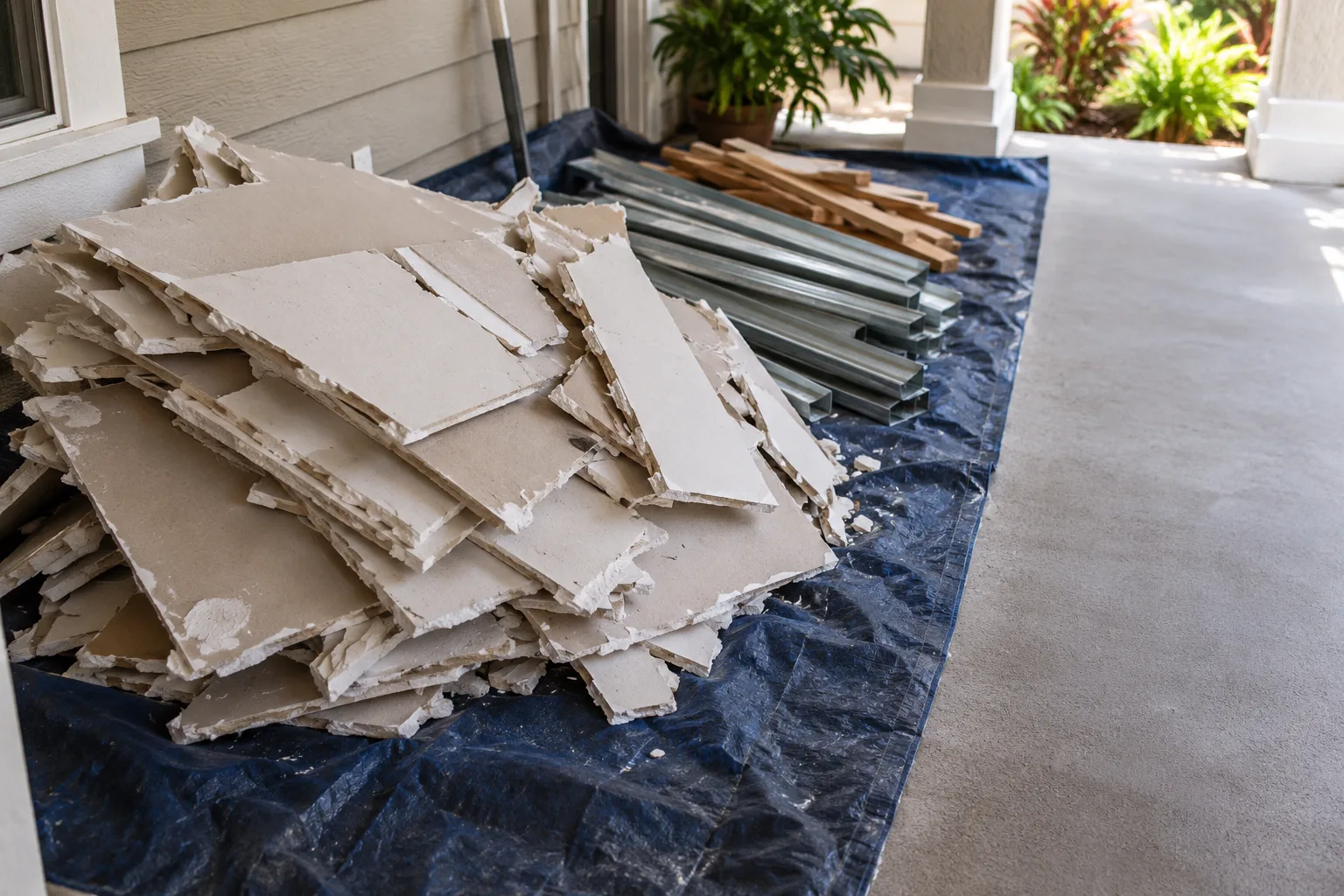
Prepare the pile, then show the route.
- Keep scraps dry and off active walkways.
- Stack larger pieces flat when safe.
- Use sturdy containers for small pieces.
- Tell us if the material is wet, unusually heavy, or from an older assembly.
What shapes the estimate
These details change the crew time, load plan, and disposal needs.
- Sheet count or pile dimensions
- Condition and moisture
- Floor level and stair access
- Distance to the loading point
- Mixed metal or insulation in the pile
Use the matching preparation guide
The guide gives you a practical checklist before you take photos or contact the team.
Questions about drywall debris removal
Do drywall scraps need to be bagged?
Large pieces can usually be stacked. Small fragments should be in sturdy containers that can be handled without tearing.
Can you remove wet drywall?
Mention moisture or water damage before scheduling. Wet material is heavier and may require different handling.
What about old textured wall material?
Do not disturb material that may contain asbestos. Arrange appropriate testing or professional guidance before ordinary debris pickup.